





President Donald Trump said he could be an extraordinarily successful politician if he simply promised voters free housing, free food and other government-funded benefits, while arguing that such a model would eventually lead to economic collapse.
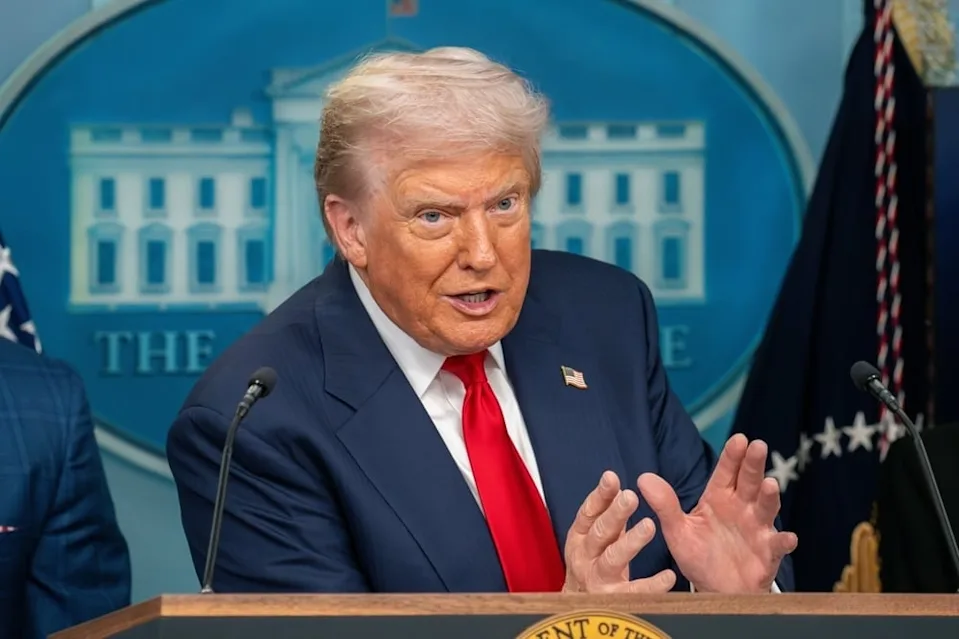
Trump made the remarks on June 3, 2026, while speaking to reporters during an executive order signing at the White House. His comments came during a discussion about communism, New York City and policies associated with Democratic-led cities.
Trump: “Nobody would be as good as me”
Trump said that if he wanted to pursue a system based on providing everything for free, he could potentially become an unbeatable political figure.
Cum e vremea în orașul tău?
Vezi pe loc temperatura, vântul și prognoza orară. Pentru prognoza detaliată pe mai multe zile, pentru orice localitate din România, intră pe portalul nostru meteo.
“I’d be the greatest in the world. Nobody would be as good as me,” Trump said.
He then described the type of promises he could make to voters.
“I would sell them: ‘You’re going to get free rent, you’re going to get free houses, you’re going to get free food. You’re going to get free everything.’”
Trump immediately added that such promises could be attractive for a limited period but would eventually create serious economic problems.
“But eventually that ends, and it leads to death, destruction and squalor 100 percent of the time,” he said.
Trump targets New York and Zohran Mamdani
Trump then turned his attention to New York City and its mayor, Zohran Mamdani, without initially mentioning him by name.
The president questioned why companies that pay hundreds of millions of dollars in taxes would remain in the city if policies encouraged them to leave.
“I don’t understand why he thinks it’s okay for all these companies that pay hundreds of millions of dollars in taxes a year to leave, because you’re not going to have any tax base,” Trump said.
He warned that a shrinking tax base could eventually result in economic hardship, describing a potential outcome as “hunger and squalor and death and destruction.”
Trump said he knows Mamdani and described him as a “very nice person” and a “smart guy,” while making clear that he strongly disagrees with his economic approach.
“Free enterprise is tougher to sell”
Trump also offered a hypothetical example of how easy it would be to win political support by promising extensive benefits.
He said a politician could tell voters they would no longer have to pay rent or mortgage interest, that their mortgages would be eliminated and that food would be provided for free.
According to Trump, such a message could be extremely powerful for a few years.
“I would be the best ever at giving it,” he said.
Trump contrasted that approach with his own support for free enterprise.
“I had to sell free enterprise. Free enterprise is tougher to sell, but that’s what’s made our country great,” he said.
Trump links his warning to major American cities
Trump also mentioned Los Angeles, parts of California and Chicago while discussing what he sees as the consequences of policies that expand government benefits and regulation.
His comments followed a post in which he had criticized communism and argued that such systems can initially become popular before eventually producing poverty, crime and social disorder.
The June 3 remarks were made during an exchange with reporters at the White House and are documented in the official presidential transcript.
Trump’s central argument was that free benefits can be politically attractive, but maintaining them requires a productive economy and a sufficiently strong tax base. He argued that free enterprise is more difficult to promote politically, but ultimately provides the economic foundation necessary to sustain prosperity.