








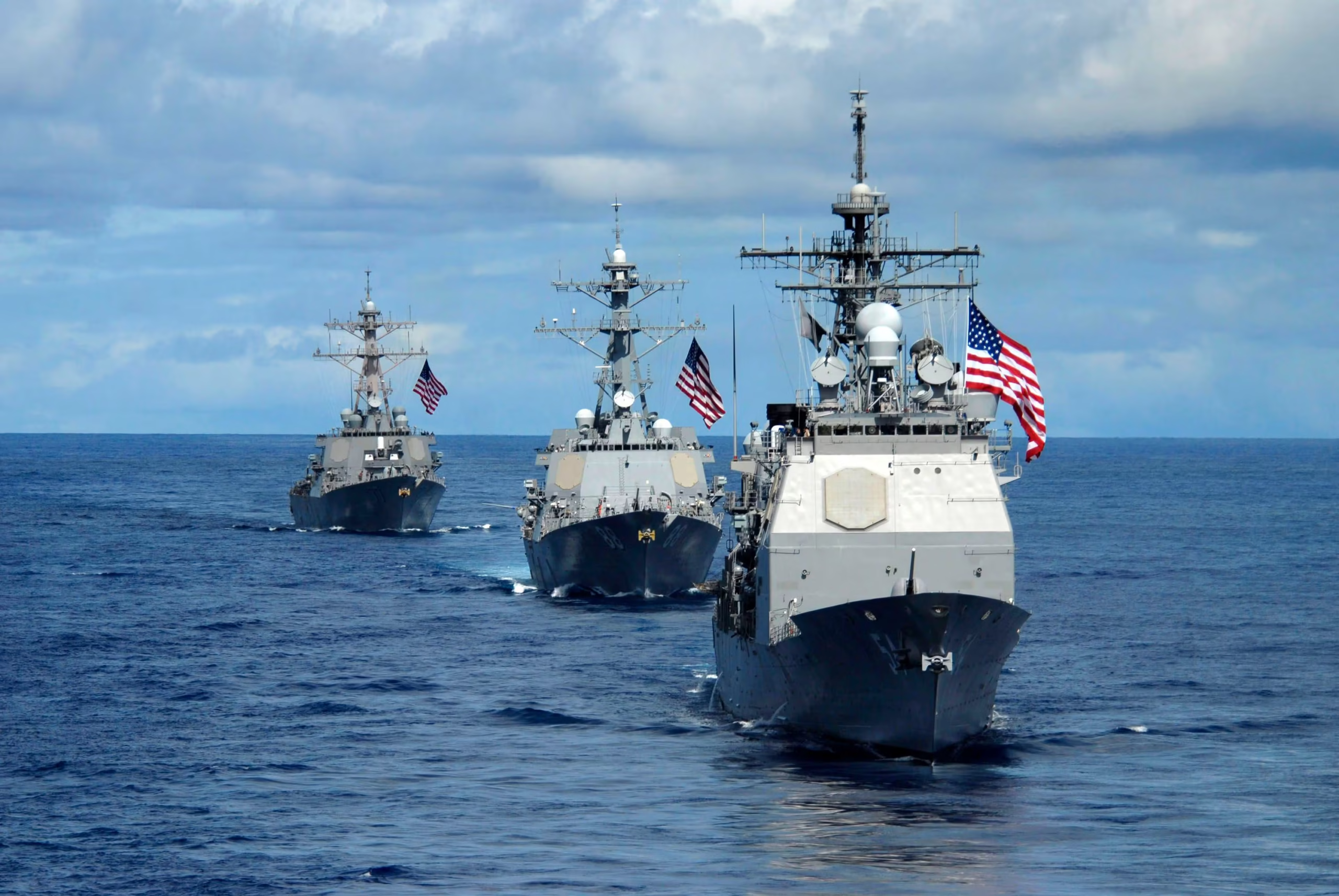
President Donald Trump has issued a directive ordering the U.S. Navy to remove the Electromagnetic Aircraft Launch System (EMALS) from its newest class of aircraft carriers and return to using traditional steam-powered catapults.
The mandate targets the future Ford-class carriers, reversing a technological shift that the U.S. Navy spent decades developing.
Key Takeaways from the Directive
- Targeted Ship: The directive specifies that the changes will begin with the fourth Ford-class carrier, the USS Doris Miller. The USS Gerald R. Ford, USS John F. Kennedy, and USS Enterprise will remain unaffected.
- Scope of Changes: In addition to replacing EMALS with steam catapults, the order directs the Navy to replace the ship’s electromagnetic weapons elevators.
- Two-Month Deadline: The Pentagon and the U.S. Navy have been given two months to present detailed plans to the White House on how to execute the system removal and redesign.
Longstanding Criticism of EMALS
President Trump has publicly criticized the electromagnetic launch system since his first term in office, expressing a preference for older steam technology. In a 2017 interview with Time magazine, Trump argued that the new system was „not good” and lacked the power of steam catapults.
Cum e vremea în orașul tău?
Vezi pe loc temperatura, vântul și prognoza orară. Pentru prognoza detaliată pe mai multe zile, pentru orice localitate din România, intră pe portalul nostru meteo.
Despite Trump’s concerns, the Navy has previously highlighted the performance of EMALS on the USS Gerald R. Ford, noting that the electromagnetic system allows for higher aircraft launch and recovery rates compared to Nimitz-class carriers.
Cost, Redesign, and Operational Impact
The transition back to steam catapults presents several financial, technical, and staffing challenges for the U.S. Navy:
1. Financial and Schedule Risks
Manufacturer General Atomics stated that work on the catapults and arresting gear for the USS Doris Miller was already roughly halfway complete. The company warned that altering course at this stage „warrants careful reconsideration” due to the significant integration risks, potential schedule delays, and added costs.
2. Crew and Maintenance Requirements
One of the primary benefits of EMALS is its efficiency; it reduced the number of sailors required to operate the catapult system from about a dozen down to just two. Returning to steam-powered systems will require a larger onboard crew to operate and maintain, adding pressure at a time when the Navy faces fleet-wide staffing shortages.
3. Global Context
While the U.S. contemplates reverting to steam, international competitors and allies are moving toward electromagnetic systems. China’s newest aircraft carriers feature electromagnetic catapults, and France plans to incorporate the technology into its next-generation carrier design.